Daewoong Pharmaceutical · 2021–2022
Customer Review Analytics for Online Stores
AI Engineer
Problem
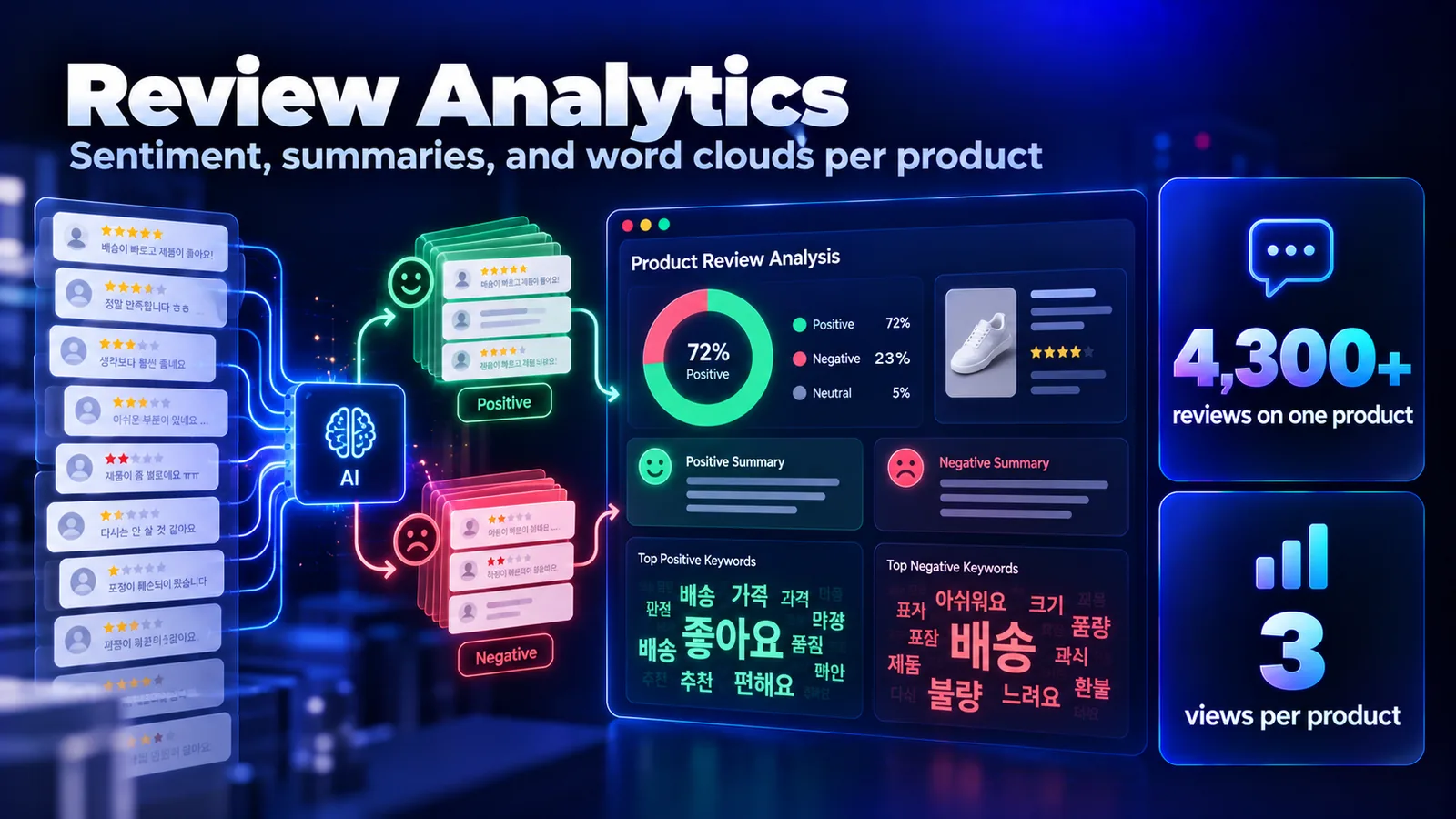
Products collected thousands of Korean reviews (the most-reviewed one passed 4,300), far too many to read. The team needed to see quickly what customers liked and disliked about each product.
Approach
I used Kakao Brain’s Pororo models for Korean. A BERT sentiment classifier labels each review, and only reviews with probability of at least 0.9 are kept. A BART summarizer turns each product’s positive and negative reviews into short summaries, and noun-only word frequencies drive positive and negative word clouds. The results load into SQLite, a Flask API serves them, and a React front end draws the charts with ApexCharts.
Architecture
Hover a component to trace its connections · drag to pan · use + / − to zoom
- Source
- Processing
- Model
- Data store
- Output
How It Works
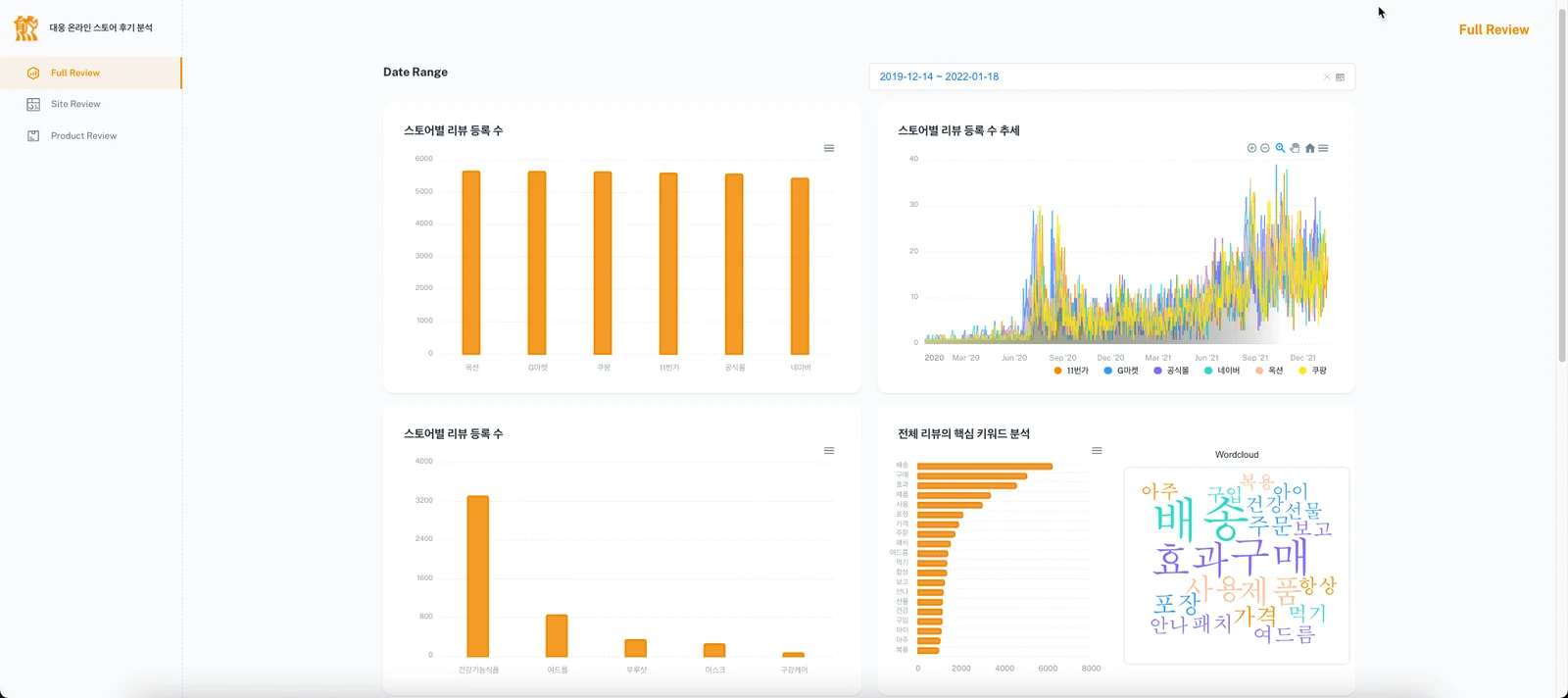
- CollectKorean customer reviews from six online stores (Auction, G-Market, Coupang, 11st, Naver, and the official mall), December 2019 to January 2022.
- ClassifyA pretrained BERT sentiment model labels each review positive or negative.
- FilterOnly reviews with sentiment probability of at least 0.9 are kept.
- SummarizeA BART model writes a positive and a negative summary for each product.
- VisualizeNoun-only word clouds and sentiment charts appear in a Flask + React dashboard.
What I Built
- The Korean sentiment pipeline with Pororo’s BERT classifier and a 0.9 confidence filter.
- Per-product positive and negative summaries with Pororo’s BART summarizer.
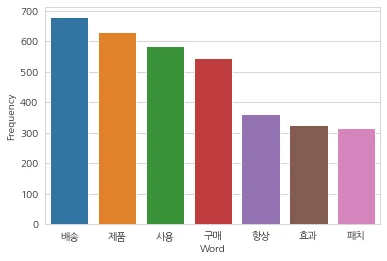
- Positive and negative word clouds from noun-only word frequencies.
- The dashboard: SQLite database, Flask API, React front end with ApexCharts, hosted on Heroku.
Impact
For each product, the dashboard shows the split between positive and negative reviews, a summary of each side, and the words customers use most, instead of thousands of reviews to read.
Screenshots & Figures